
¿Qué vas a encontrar aquí?
Istanbul, the majestic city that unites two continents, is a treasure trove of history, culture, and architectural wonders. With a heritage that spans legendary empires such as the Byzantine and Ottoman, this beautiful city offers a unique experience where East and West come together. Its iconic monuments, such as the Hagia Sophia, the Blue Mosque and Topkapi Palace, tell the story of centuries of splendour and mystery. To visit Istanbul is to embark on a journey through time, where every street and every building tells a fascinating story. So let’s get ready to take a tour of the top 10 monuments in Istanbul.
10 Best Monuments in Istanbul
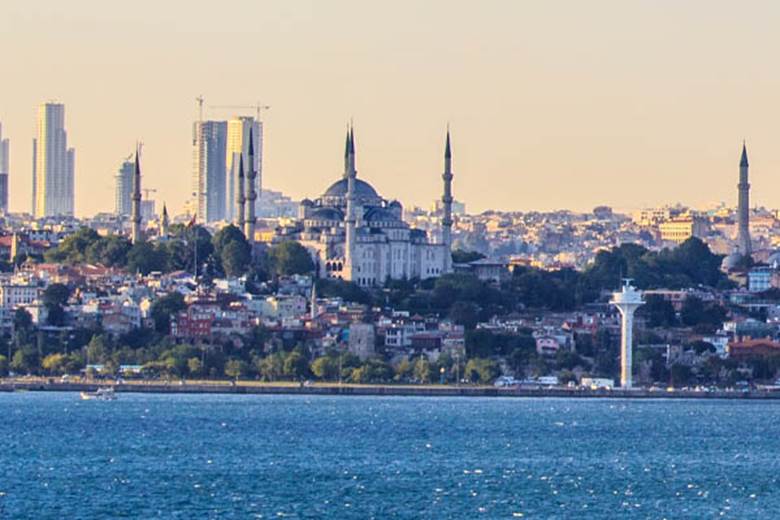
If you are a tourist looking for culture, history and monuments that impress you you have to place more than one, if not all of these monuments on your tours of the city.
Hagia Sophia: Icon of world architecture
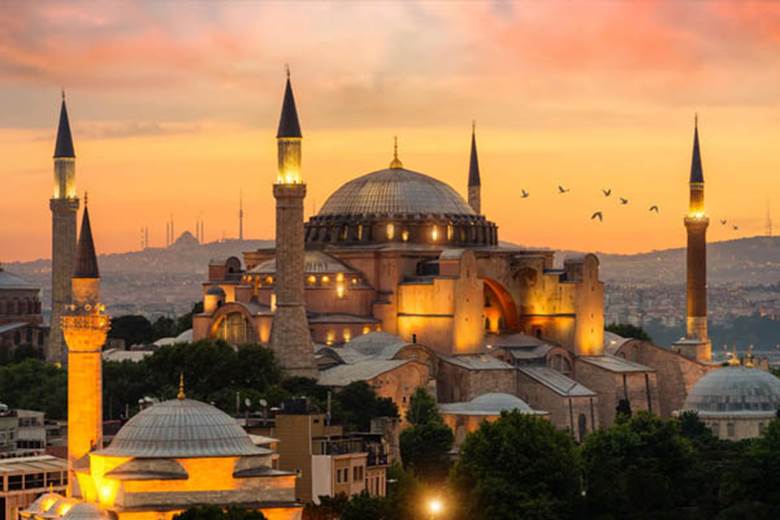
Hagia Sophia, or Hagia Sophia (Ayasofya in Turkish), is one of the most outstanding architectural wonders in the world. Built between 532 and 537 by the Byzantine Emperor Justinian, it was the largest cathedral in Christendom until the 15th century. Its imposing central dome remains an engineering masterpiece. Throughout its history, it has been an Orthodox cathedral, a mosque after the Ottoman conquest in 1453, a museum in 1935 and, since 2020, it has returned to being a mosque.
Located in the heart of Istanbul, on Sultanahmet Square, near the Blue Mosque and Topkapi Palace. It is a symbol of the rich Byzantine and Ottoman history. It has influenced numerous subsequent religious structures, both Christian and Islamic.
Hagia Sophia is open to the public every day except Fridays, from 9:00 a.m. to 5:00 p.m., and the best time to visit is in spring and autumn. Admission is free, and respectful dress is required. Women must cover their heads. It is allowed to take photographs without flash, always respecting the rules of the place and maintaining a respectful tone.
Topkapı Palace: Symbol of Ottoman Splendor

Topkapı Palace (Topkapı Sarayı), built in 1459 on the orders of Sultan Mehmed II, was the main residence of the Ottoman sultans from 1465 to 1853. This majestic complex includes gardens, courtyards and numerous rooms, standing out for its architecture and the historical treasures it houses.
Located on the Sarayburnu promontory above the Golden Horn, it offers views of the Bosphorus and the Sea of Marmara. It is close to the Blue Mosque and Hagia Sophia, making it a must-see stop in Istanbul. For more than 400 years, it was the administrative center of the Ottoman Empire. After the fall of the empire, it was converted into a museum in 1924, and today it is one of the most visited in the city.
It is open every day, except Mondays, from 9:00 a.m. to 5:00 p.m. Admission is paid, and it is recommended to purchase tickets online to avoid long lines. The best time to visit is in spring and autumn. It is suggested to dress modestly and allocate at least 3-4 hours to visit it. Hiring a tour guide enriches the experience by providing details about its fascinating history.
Blue Mosque: Wonder of Ottoman architecture
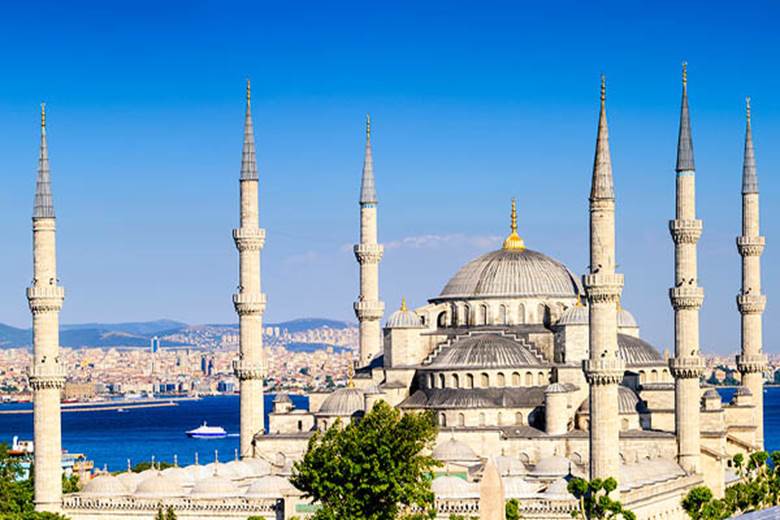
The Blue Mosque, or Sultan Ahmed Mosque, is one of the main attractions of Istanbul. It is famous for its majestic Ottoman architecture and its more than 20,000 blue ceramic tiles that decorate its interior. It is the only mosque in Istanbul with six minarets, making it unique and easily recognizable.
Located in the Sultanahmet district, opposite the Hagia Sophia, it was built between 1609 and 1617 by order of Sultan Ahmed I, on the site of the former Grand Palace of Constantinople. Its historical relevance and architectural beauty have made it a UNESCO World Heritage Site since 1985.
It is open to the public daily from 9:00 a.m. to 6:00 p.m., except during prayer times and Friday mornings. The best time to visit is in summer, when the light enhances its colors, although winter is ideal to avoid crowds.
Admission is free, but donations are accepted. Visitors must respect the rules: enter barefoot, dress modestly (women must cover themselves with a headscarf), and maintain respectful behavior, as it is still an active place of worship.
Basilica Cistern: The Majestic Sunken Palace
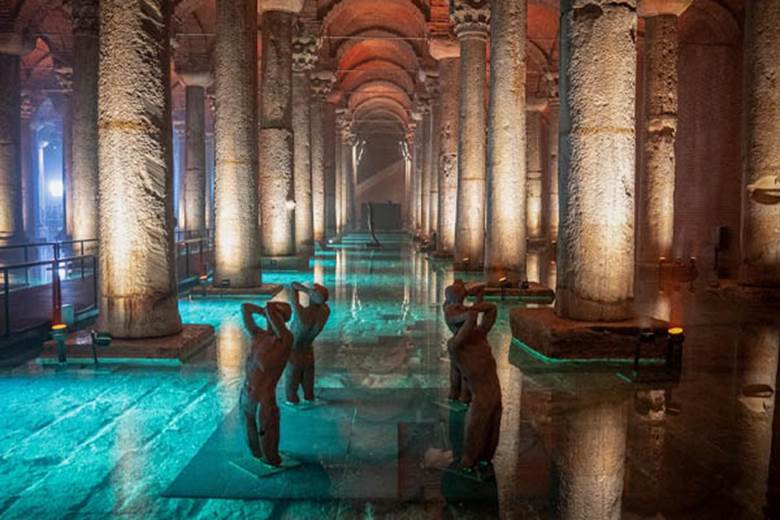
The Basilica Cistern, known as Yerebatan Sarayı or Sunken Palace, is one of the most impressive cisterns in Istanbul. Built in 532 during the reign of Byzantine Emperor Justinian I, it measures 140 meters long by 70 meters wide and can store up to 80,000 cubic meters of water. Supported by 336 marble columns, it stands out for the enigmatic Medusa heads that serve as bases in two columns.
Located just 100 meters from Hagia Sophia, in the Sultanahmet district. It was built to supply water to the Great Palace of Constantinople in case of siege, especially after the destruction of the Aqueduct of Valens During the Ottoman era, it continued to supply water to Topkapi Palace until a system of its own was developed.
The cistern is open daily from 9:00 a.m. to 11:50 p.m., with an entrance fee of 800 TL for daytime visits and 1,300 TL for nighttime visits. The best time to visit is in spring and autumn. It is recommended to wear comfortable clothes as the environment is cool and humid, and a camera to capture your unique atmosphere. Guided tours enrich the experience by revealing the secrets of this underground masterpiece.
Galata Tower: Istanbul’s iconic viewpoint
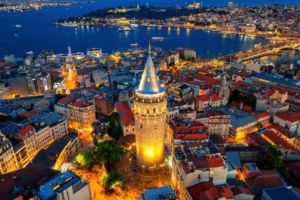
The Galata Tower, built in 1348 by the Genoese, is one of the most iconic monuments in Istanbul. At 67 metres high and with nine floors, it offers unparalleled panoramic views of the city from its upper platform. Its origin dates back to the Genoese expansion in Constantinople, being erected on the remains of a Byzantine tower destroyed during the Fourth Crusade in 1204. Over the centuries, it has served as a watchtower, lighthouse, and observation point.
Located in the Galata neighborhood, north of the Golden Horn, it dominates the city’s skyline from the European side of Istanbul. During the Ottoman conquest in 1453, Sultan Mehmet II used it as a strategic outpost.
The tower is open daily from 8:30 AM to 11:00 PM, with an entrance fee of 650 TL (approximately 18.90 USD). The best times to visit are spring and autumn, when the weather is pleasant and the crowds are smaller. You can get to Karaköy by tram and then take the Tünel funicular. In addition to the views, it offers exhibitions on its history and, occasionally, dinner shows, an unforgettable experience for visitors.
Dolmabahçe Palace: European elegance in the heart of Istanbul
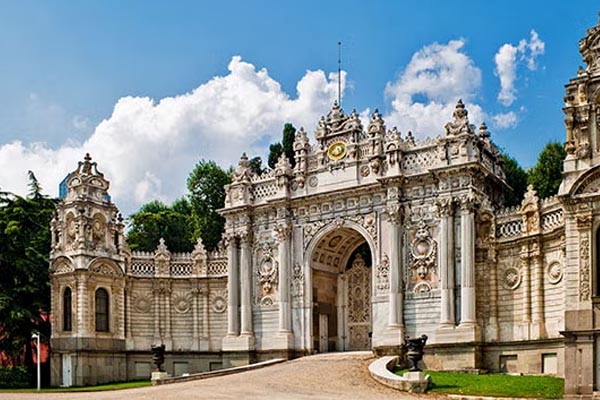
The Dolmabahçe Palace, built between 1842 and 1856 by order of Sultan Abdül Mecid I, is an icon of neo-baroque architecture in Istanbul. It combines Baroque, Rococo, and Neoclassical styles with traditional Ottoman elements. The palace has 285 rooms, 46 halls and stands out for its Crystal Staircase and the Throne Room, which houses the largest crystal chandelier in the world.
Located on the European coast of the Bosphorus, in the Beşiktaş district. It was the residence of the Ottoman sultans from 1853 to 1922, and of the founder of the Republic of Turkey, Mustafa Kemal Atatürk, who died there in 1938.
The palace is open from 9:00 a.m. to 5:00 p.m., except Mondays and holidays. Guided tours, available in Turkish and English, require prior reservation due to high demand. The best time to visit is in spring and autumn, when the weather is most pleasant.
It is recommended to arrive by public transport, carry cash for possible additional tickets and wear comfortable clothes to explore the extensive grounds. To visit Dolmabahçe is to immerse yourself in opulence and Ottoman and Turkish history.
Süleymaniye Mosque: A Masterpiece of Ottoman Architecture

The Süleymaniye Mosque, built between 1550 and 1557 by the imperial architect Mimar Sinan under the rule of Sultan Süleyman the Magnificent. It is a jewel of Istanbul that stands out for its 53-meter-high central dome and its four imposing 72-meter minarets. The interior is decorated with Iznik tiles and an elegant white marble mimbar, which enhances its beauty and solemnity.
Located on the third hill of Istanbul, it offers panoramic views of the Golden Horn, making it a prime place to contemplate the city. It is a symbol of the heyday of the Ottoman Empire and a tribute to Sultan Süleyman, famous for his justice and wisdom.
Open daily from 9:30 a.m. to 4:30 p.m. Admission is free, although it is recommended to avoid prayer times. The best time to visit is in spring and autumn, when the weather is more pleasant and there are fewer tourists.
Visitors should dress modestly, covering arms and legs. It is permissible to take photos, but should be avoided during prayer. The Süleymaniye Mosque is a space of faith, history and architecture that captivates those who visit it.
Monument to the Republic: An emblem of Turkish independence
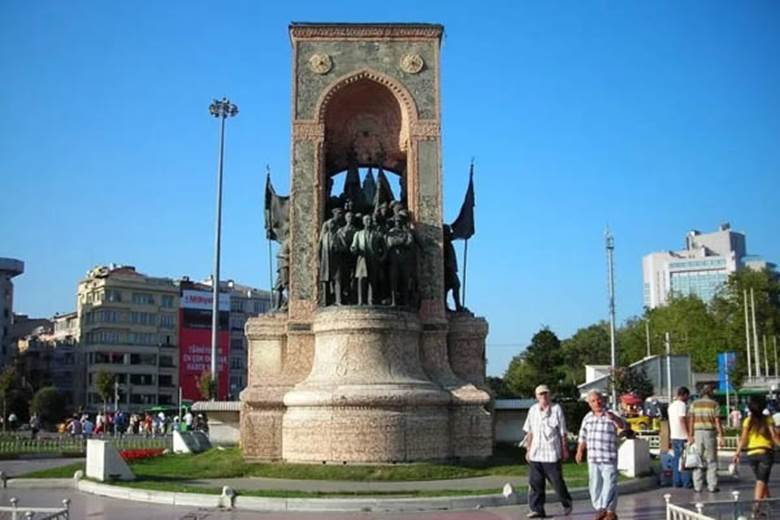
The Monument to the Republic (Cumhuriyet Anıtı), inaugurated on July 8, 1928, was designed by Italian sculptor Pietro Canonica to commemorate the founding of the Turkish Republic in 1923. The 11-meter-tall statue depicts key figures such as Mustafa Kemal Atatürk, İsmet İnönü, and Fevzi Çakmak, founders of the republic. It also includes figures such as Mikhail Frunze and Kliment Voroshilov, who symbolize the Soviet Union’s military support during the Turkish War of Independence.
Located in Taksim Square, one of the most iconic areas of Istanbul, the monument is open 24 hours a day and is free to enter. It is a symbol of Turkey’s independence and the birth of the Republic, financed by the Turkish population and built in two and a half years.
The best time to visit is during spring and autumn, when the weather is most pleasant and the crowds are smaller. The square is accessible by public transportation, including metro, trams, and buses. When visiting, it is recommended to keep an eye on belongings and respect cultural norms, especially in nearby religious areas.
The Hippodrome of Constantinople: Heart of the Ancient City
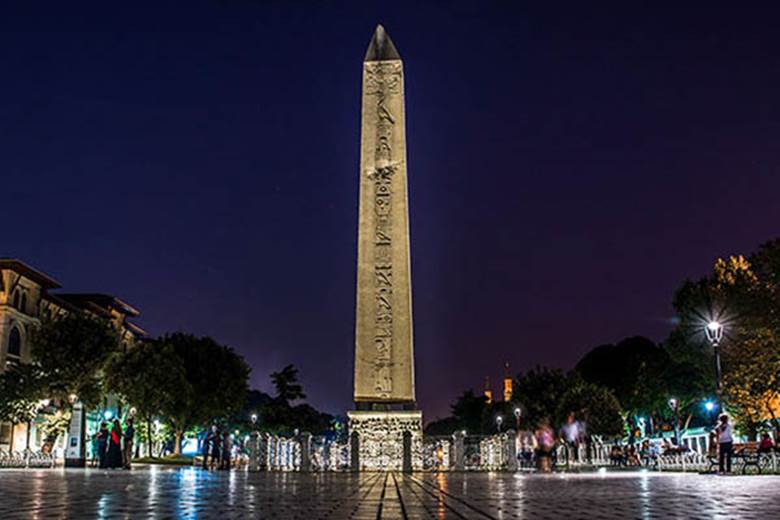
The Hippodrome of Constantinople, currently known as Sultanahmet Meydanı, is a historic square in the heart of Istanbul. It was the city’s sports and social center during the Byzantine and Ottoman Empires. Originally, the racetrack was a chariot racing track with a capacity of 100,000 spectators. Today, only vestiges such as the Obelisk of Theodosius and the Serpent Column remain.
Built in 203 AD by the Roman Emperor Septimius Severus, the hippodrome was expanded by Constantine the Great in 324 AD, when he renamed Byzantium Constantinople. For more than a thousand years, it was the center of the city’s public life.
Located on Sultanahmet Square, near the Blue Mosque and other monuments, the hippodrome is open 24 hours a day, with free admission. The best time to visit is in spring (April-June) and autumn (September-November), when the weather is pleasant and the crowds are smaller. It is easily accessible on foot from other tourist sites, and public transport such as buses and trams connects the area well. It is recommended to keep an eye out for security, although Istanbul is generally safe.
The Church of St. Saviour in Chora: A Treasure of Byzantine Art in Istanbul
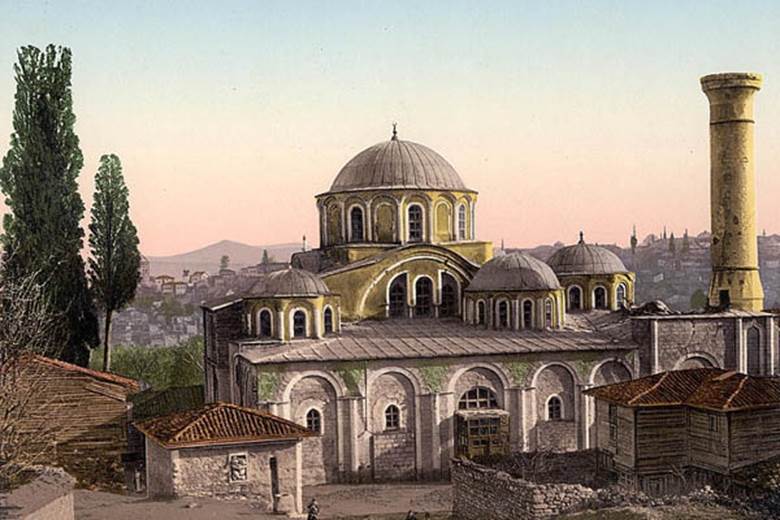
The Church of St. Saviour in Chora, or Kariye Müzesi, is an outstanding example of Byzantine art in Istanbul, Turkey. Built between 1316 and 1321. It was designed by Theodore Metoquines and is famous for its impressive frescoes and mosaics, which are considered to be among the best preserved in the world. The interior of the church is decorated with religious images of Jesus Christ, the Virgin Mary and the ancestors of Jesus.
Originally, in the 4th century, a monastery was founded on the site, and over the centuries, the church was rebuilt, especially under Emperor Justinian I. After the Ottoman conquest of Constantinople, the church was converted into a mosque and, in 1948, it was transformed into a museum. It is located in the district of Edirnekapi, near the wall of Theodosius.
The church is open every day except Wednesdays, with visiting hours from 9:00 a.m. to 7:00 p.m. in summer and 9:00 a.m. to 5:00 p.m. in winter. The best time to visit is during spring and summer, when the weather is more pleasant and you can best enjoy the frescoes and mosaics.
Tips and important information if you are going to be a tourist in Istanbul.
Visiting Istanbul is an unforgettable experience, and to make the most of your trip. Here are some tips and important facts for tourists:
1. Currency and Payments
The currency is Turkish Lira (TRY). To exchange money, avoid doing it at airports, as the fees are higher. Look for currency exchange offices in the city centre. Carry cash for markets and small shops. In most tourist places they accept credit cards.
2. Transportation
For public transport use the Istanbulkart, a rechargeable card valid for trams, metro, buses and ferries. The Tram T1 runs through the main tourist sites such as Sultanahmet, the Grand Bazaar, and the Bosphorus. Use official (yellow) taxis and make sure they use the meter to avoid negotiating fixed prices. Ferries are crucial for moving between Europe and Asia, offering unique views of the Bosphorus.
- Accommodation
Depending on what you are looking for, there are different accommodation options. Consider Sultanahmet: Ideal for being close to the main monuments such as Hagia Sophia and the Blue Mosque. Beyoğlu: Modern area with shops, restaurants and the famous Istiklal Caddesi street. Üsküdar/Kadiköy (Asia): Quieter, offers a more local experience.
4. Schedules and Customs
Most museums and monuments are open between 9:00 am and 5:00 pm, closing on Mondays or Tuesdays. Wear modest clothing when visiting mosques; leg and shoulder coverings are required. Women must cover their heads. Tourists are not allowed to enter during prayer times, especially on Friday.
5. Gastronomy
Typical dishes: Try kebap, meze (starters), baklava, and künefe (cheese and honey dessert). Drinks: Turkish tea is ubiquitous, and Turkish coffee is strong and aromatic. Stay well hydrated, it is best to consume bottled water.
6. Safety and Culture
Istanbul is relatively safe, but as in any big city, watch out for pickpockets in crowded areas. Be respectful of local customs. A common greeting is to say “Merhaba” (hello) and “Teşekkür ederim” (thank you).
7. Shopping and Haggling
In the Grand Bazaar and Spice Bazaar, haggling is mandatory. Start by offering less than half the starting price. The best products to buy are carpets, Turkish lamps, spices, sweets, and ceramics.
8. Recommended excursions
Bosphorus cruises offer breathtaking views of the city and its palaces. Princes’ Islands are ideal for a day trip, they are famous for their beaches and tranquil atmosphere. Take a tour of the Golden Horn, including historical sites such as the Eyüp neighborhood.
9. Wi-Fi and Communications
Wi-Fi is available in most cafes, restaurants, and hotels. If you want a local SIM you can buy one for data at the airport or operator stores such as Turkcell or Vodafone.
10. Language
The main language is Turkish, but English is common in tourist areas. Learn basic Turkish phrases, you will be well received.
Istanbul is a city full of contrasts, where history and modernity are intertwined, enjoy exploring every corner!
Conclusion
Istanbul is not just a tourist destination, it is an experience that awakens the senses and enriches the soul. Its monuments, witnesses of centuries of history. Are a reminder of the greatness of the civilizations that left their mark on this unique city. To invite you to discover Istanbul is to invite you to experience the magic of a metropolis where the ancient and the modern merge in perfect harmony. Dare to explore its treasures, and let this unforgettable city captivate you forever.
Leave a Reply